

Travel safety isn’t about looking over your shoulder every five seconds—it’s about eliminating the silly, avoidable mistakes that turn a slight hiccup into a day-destroying headache.Travel Safety Guide When you have a few simple habits running on autopilot, you stop worrying about “what if” and actually enjoy the place you’re visiting.Here is a straightforward, real-world guide to staying safe without feeling like a paranoid tourist.
The Unspoken Rules of Travel Safety Guide
1. Don’t Put Your Entire Financial Life in One Pocket If your wallet gets swiped at a busy train station, you shouldn’t lose every credit card, debit card, and bill you own in one go.
- The Split Rule: Keep one credit card and some everyday local cash in your wallet. Tuck a second, backup card and emergency money somewhere completely separate—like an inside zipper pocket of your main daypack or in your room safe.
- The Phone Buffer: Enable Apple Pay or Google Pay. If your physical wallet gets misplaced, you can still buy dinner or call a ride-hailing service using your phone.
2. Handle Your Phone Like the Lifeline It Is Losing your phone isn’t just an inconvenience anymore; it’s losing your boardings passes, hotel address, translation app, and ride apps all at once.
- Table Etiquette: Never set your phone face-up on an outdoor café table or the edge of a bar. Distraction scams work fast—someone lays a map or petition over your phone, talks to you for ten seconds, and walks away with it.
- Offline Access: Download the offline map of your destination city on Google Maps before leaving your hotel Wi-Fi. That way, if you lose cell signal or public Wi-Fi fails, you can still navigate back to your stay.
3. Move With Purpose (Even When You’re Lost) Pickpockets and scammers target people who look completely overwhelmed.
- If you need to figure out which train line to take or check a map, step out of the main pedestrian flow. Stand against a building wall, pull up your phone, get your bearings, and then step back out onto the street walking like you know exactly where you’re going.
Quick Risk vs. Action Table Travel Safety Guide
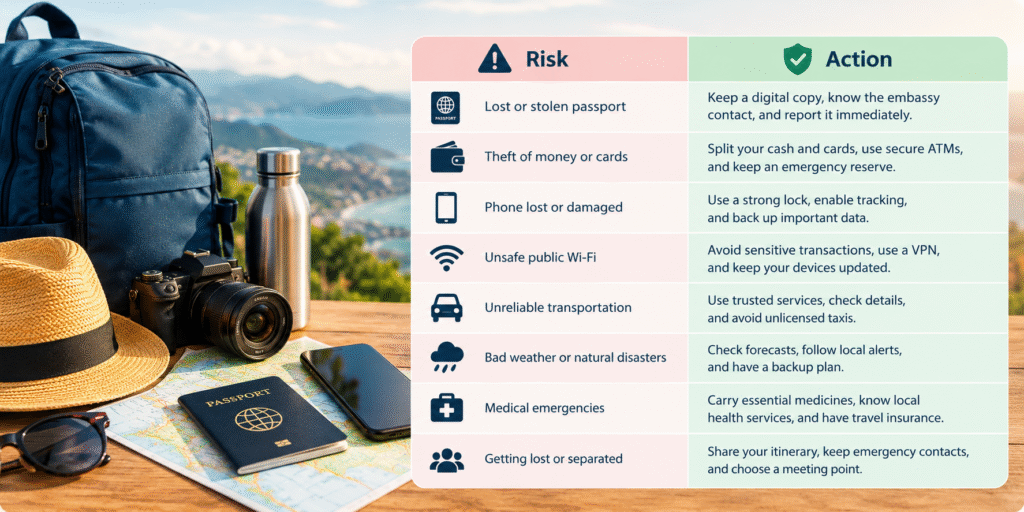
| Potential Friction Point | Simple Prevention | Avoid Doing This |
|---|---|---|
| Unreliable Local Transport | Use trackable ride-hailing apps (Uber, Grab, Bolt) or official airport taxi desks. | Getting into unmetered, unmarked cars parked right outside arrival gates. |
| Crowded Sightseeing Spots | Wear a small cross-body bag zipped shut across your chest. | Putting your phone or wallet in your back jeans pocket or open coat pockets. |
| Loss of Main Passport | Keep a clear photo of your passport page saved on your phone and a printed copy in your bag. | Carrying your physical passport everywhere unless local law strictly requires it. |
Three Small Steps to Take Before You Leave the Room Travel Safety Guide
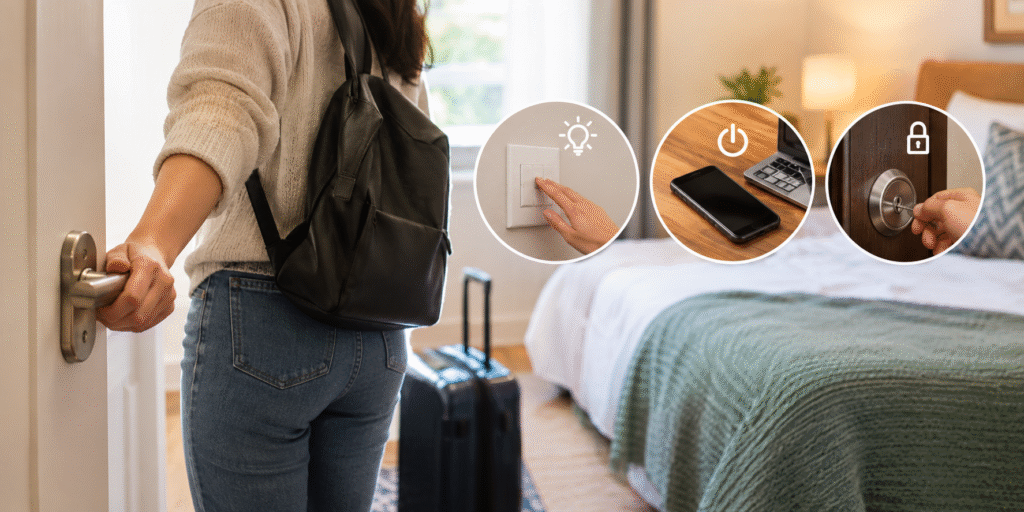
- Grab a Business Card from the Lobby: Put the hotel’s physical card or printed address slip in your pocket. If your phone dies late at night, you can hand it to any taxi driver without needing to speak the local language.
- Text Your Rough Plan to One Person: You don’t need to give an hour-by-hour itinerary.Travel Safety Guide A quick message saying “Heading up to the historic quarter for lunch, then checking out the market” gives someone at home a starting point if anything goes sideways.
- Check the ATM Reader: If you need cash, use an machine physically inside a bank branch rather than a standalone kiosk on a dark street corner. Give the card slot a firm tug before inserting your card to make sure there’s no plastic skimmer attached.
Travel is supposed to be fun. Travel Safety Guide Get these basic precautions out of the way first so you can spend the rest of your trip focusing on the sights, the food, and the experience.
FAQ’S
1. What are the most important travel safety tips?
Research your destination, protect your documents and money, use reliable transportation, stay aware of your surroundings, and keep emergency contacts handy.
2. How can I keep my belongings safe while traveling?
Use secure bags, keep valuables close to you, avoid displaying expensive items, and store important documents and extra payment cards securely.
3. Is travel insurance important?
Travel insurance can provide financial protection for eligible medical emergencies, cancellations, delays, lost baggage, and other unexpected travel problems.
4. How can I stay safe when traveling alone?
Share your itinerary with someone you trust, choose reliable accommodation and transportation, avoid risky areas, and stay connected with someone at home.
5. How can I stay safe when traveling internationally?
Check entry requirements and local laws, secure your passport, research local customs, save emergency contacts, and learn about common scams before you leave.