

The old startup manual—signing a five-year lease on an office, securing a massive bank loan, hiring a full team, and crossing your fingers for foot traffic—is officially dead and buried.Today, you can build a legitimate, profit-generating company right from your kitchen counter.Trends All it really takes is a laptop, a sharp skill set, and a direct line of communication to a specific group of people who need what you do.
The catch? Lower barriers to entry mean a vastly noisier marketplace. The internet is flooded, attention spans are practically zero, and buyers are deeply skeptical of slick marketing. The founders who are actually building sustainable businesses right now aren’t chasing every shiny new tool or viral trend. They’re doing something far simpler: paying attention to everyday annoyances, uncomplicating clunky processes, and building practical solutions that people are relieved to pay for.
What’s Actually Changing Behind the Scenes

Several big shifts have permanently altered how small businesses launch and scale:
1. Practical AI as Everyday Infrastructure
Artificial intelligence has moved past the hype cycle into daily digital plumbing. Smart solo operators aren’t trying to build complex AI products—they’re using off-the-shelf tools to automate administrative drudgery, clean up messy spreadsheets, draft routine communications, and manage initial client intakes. The real financial opportunity lies in using existing tools to take friction out of traditional, slow-moving industries.
2. Complete Geographic Freedom
Modern digital tools have made physical borders practically irrelevant. You can comfortably run an operation out of a quiet suburb while serving clients in major metros across the globe and hiring specialized contractors wherever they happen to live. Slashing physical overhead isn’t just a comfort move; it drops your burn rate drastically, buying you time to test and figure out what actually works.
3. Direct, Unfiltered Audience Access
Between specialized newsletters, private online communities, and niche content channels, you no longer have to pay astronomical ad fees to gatekeeping platforms or middleman distributors. You can share real, unvarnished expertise online, listen closely to what your audience struggles with, and launch products directly to people who already trust you.
4. Buyers Expect Real Personalization
Modern consumers have seen every sales trick in the book. They look past corporate polish and gravitate toward fast response times, radical transparency, and genuinely tailored experiences. Nimble, small businesses actually hold a massive advantage here—they can offer a level of thoughtful, personal care that giant corporations simply can’t match.
10 Trends Business Models Making Real Traction

+-------------------------------------------------------------------------+
|                  THE MODERN ENTREPRENEURIAL LANDSCAPE                   |
+-------------------------------------------------------------------------+
|                                                                         |
|  [ TECH-ENABLED SERVICES ]   [ DIRECT ENGAGEMENT ]   [ SPECIFIC NEED ]  |
|   • AI Workflow Automation    • Creator Communities   • Micro-Niche E-com|
|   • Industry Marketing        • Outcome-Based Learning• Honest Eco-Goods|
|   • High-Skill Freelancing    • Social Commerce       • Tailored Health  |
|                                                                         |
|  [ HYBRID & RETAINERS ]                                                 |
|   • Retention Subscriptions                                             |
|   • Local Business Digital Upgrades                                     |
|                                                                         |
+-------------------------------------------------------------------------+
1. Applied AI Services
Instead of pitching vague “AI transformation,” successful operators are fixing explicit bottlenecks. A local property management team might need automated tenant intake. An HVAC contractor might need an effortless system to schedule service calls and follow up on quotes. The value isn’t the software itself—it’s the time, stress, and money you save the business owner.
2. Deep-Niche Markets
When you attempt to speak to everybody, your message lands with nobody. Going narrow creates instant authority. Instead of selling general home office furniture, focus exclusively on space-saving setups for small apartments. Instead of broad pet accessories, focus entirely on mobility tools for aging dogs. When a buyer feels like a product was engineered specifically for their exact problem, the decision to buy is easy.
3. Creator-Led Operations
People buy from human beings they trust, not faceless logos. Professionals who consistently share free, genuine insights on video, in newsletters, or through podcasts build an organic foundation of trust. Once that relationship exists, offering paid consulting, digital toolkits, private communities, or physical products feels like a natural, helpful evolution.
4. Honest, Transparent Sustainability
Vague buzzwords like “eco-friendly” or “green” don’t cut it anymore. Conscious consumers want proof. Successful brands in this space show their working out: plastic-free shipping, local sourcing, modular designs built to be repaired, or fully disclosed ingredient lists. Real transparency beats glossy marketing every single time.
5. Hyper-Personalized Wellness
One-size-fits-all health advice is being replaced by tailored lifestyle support. There is steady demand for specialized fitness programs, sleep optimization setups, targeted meal planning, and lifestyle coaching designed around specific demographics or daily routines.
6. Outcome-Based Learning
Long, rambling 30-hour video courses are gathering digital dust. People want direct, practical instruction that yields a tangible result. Short workshops, live cohort classes, and focused digital guides that answer one simple question—“What will I actually be able to do once I finish this?”—are winning the educational market.
7. Specialized High-Skill Services
Offering a specialized service remains one of the absolute fastest ways to generate immediate cash flow. Trends Taking a skill you already have—like conversion copywriting, technical SEO, short-form video editing, or sales pipeline setup—and selling it B2B gets you off the ground with virtually zero startup capital while giving you front-row seats to what companies are struggling with.
8. Native Social Commerce
Social media platforms are no longer just for discovery; they’re direct checkout counters. A prospective buyer sees a product used naturally in a short clip, checks real user comments for social proof, visits the profile, and checks out within a couple of minutes. However, virality is only the front door—dependable shipping and solid customer support are what convert one-off buyers into long-term clients.
9. Retention-First Subscriptions
Recurring revenue is the dream, but keeping subscribers month after month takes constant work. Successful subscription setups—whether delivering specialized software, curated physical goods, or private industry networks—focus obsessively on providing unmistakable, fresh value every single billing cycle.
10. Digital Upgrades for Local Businesses
You don’t need to launch a high-tech platform to build a great business. Millions of local brick-and-mortar operations—salons, auto repair shops, local contractors, fitness studios—are running on outdated systems. Helping a local business set up online booking, automated review requests, or smooth digital payments is a straightforward, high-value consultancy model.
5 Trends Practical Ideas to Launch Small

If you want to keep your initial risk minimal, consider starting with one of these high-demand concepts:
- AI Workflow Consultancy: Help small business owners automate repetitive admin, client onboarding, and lead routing.
- Vertical Marketing Partner: Pick one specific trade or industry—like dental clinics or boutique gyms—and master their customer acquisition pipeline.
- Outcome-Focused Training: Package a high-value skill into a live, interactive workshop built around a very specific result.
- Micro E-Commerce Store: Curate a tight, high-quality collection of gear tailored to a passionate, specific hobby group.
- Transparent Eco-Essentials: Create everyday household goods made with minimal packaging waste and fully disclosed ingredients.
Pressure-Testing Your Idea Before You Spend a Dime
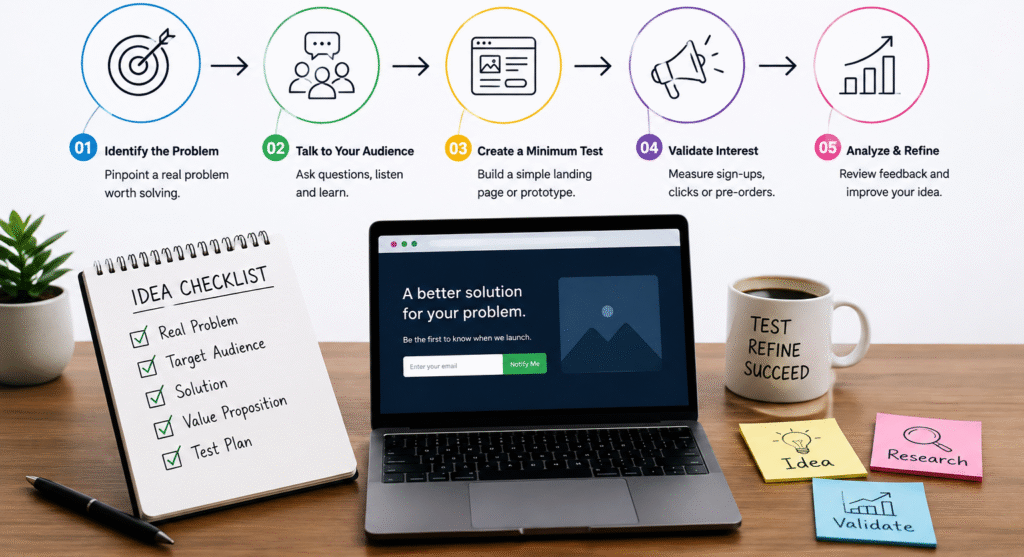
An idea can sound genius in your head and still completely flop in the real world. Trends Before investing serious time or savings, run your concept through a simple validation filter:
[ Identify Specific Friction ] ──> [ Use Current Skills ] ──> [ Run a Cheap Pre-Test ] ──> [ Refine with Real Feedback ]
- What explicit problem am I solving? People pay to eliminate frustrations, save time, or achieve clear goals. If you can’t explain the core problem in one simple sentence, refine it.
- Who is motivated to pay for this right now? Having an interested audience isn’t enough; you need buyers who have both the financial means and the immediate urgency to fix the issue.
- What can I build using what I already know? Starting with your existing skill set eliminates upfront development costs and reduces early learning friction.
- How can I test demand for under $100? Talk directly to target clients, throw up a simple landing page, deliver a service manually, or take pre-orders. Get hard proof that people will actually part with their money before you go all-in.
Why Starting Lean Beats Over-Building Every Single Time
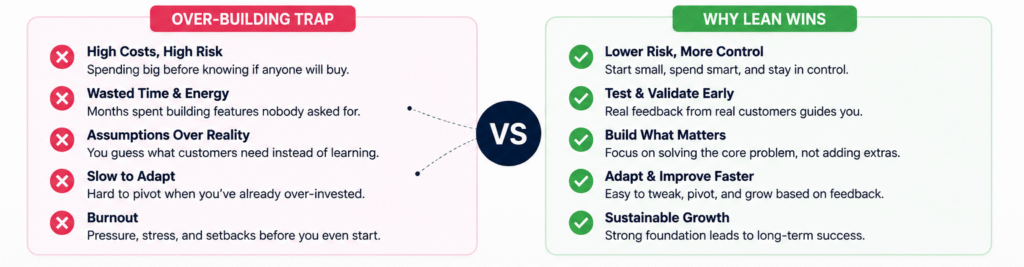
One of the biggest momentum-killers for new founders is trying to look like an established enterprise on day one. You do not need a slick office, custom branding packages, a legal team on retainer, or an extensive product line to launch.
- Begin with a stripped-down, high-quality version of your core offer.
- Land your first handful of paying clients.
- Pay ruthless attention to how they interact with what you built.
- Ask what worked, what felt confusing, and what was missing.
- Refine the experience based on actual real-world usage, then begin scaling.
Starting small isn’t about setting low expectations. It’s about getting real market feedback before taking unnecessary financial hits.
Non-Negotiable Skills Trends for Modern Founders
- Practical Problem-Solving: Looking past superficial complaints to fix the root cause of a client’s frustration.
- Jargon-Free Communication: Explaining your offer’s value so clearly that anyone can understand what it does and why it matters within ten seconds.
- Basic Financial Mechanics: Keeping a firm grip on your baseline metrics—cash flow, profit margins, acquisition costs, and monthly overhead.
- Intellectual Flexibility: Holding your ideas loosely and pivoting your offer, pricing, or messaging the second real customer data proves your assumptions wrong.
Common Traps That Kill Early Momentum
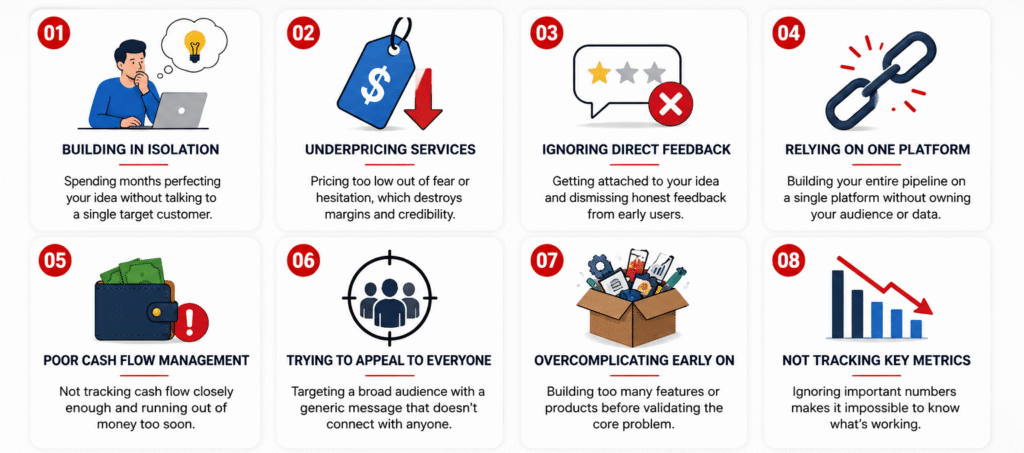
- Building in a Vacuum: Spending months polishing a product in secret without showing it to a single target customer.
- Underpricing Out of Fear: Setting prices too low just to win early deals, which destroys your profit margins and makes clients question your quality.
- Getting Defensive: Ignoring or arguing with early user critiques instead of using that raw feedback to build a better experience.
- Relying Entirely on One Platform: Building an entire business on top of a single social media platform or marketplace without capturing direct email addresses or contact details.