
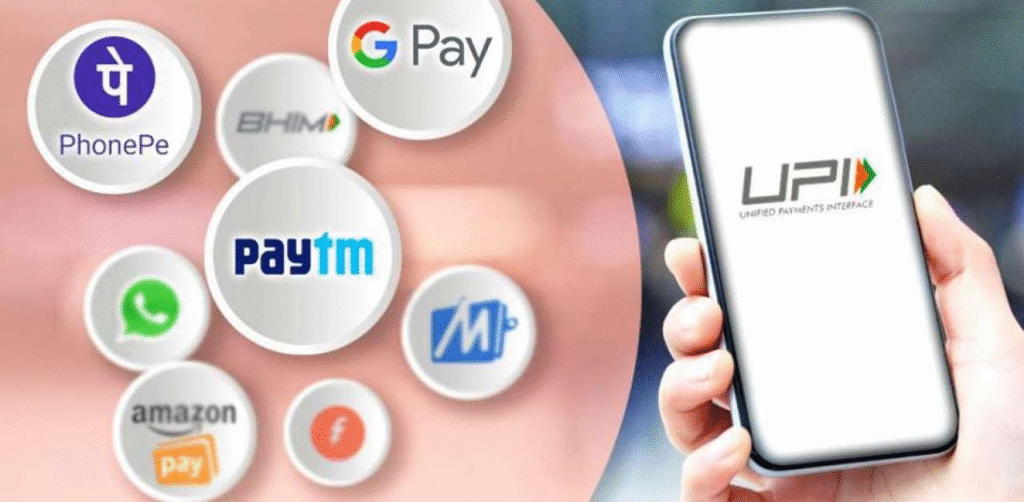
The transition from physical currency—grounded for millennia in specie, precious metals, and fiat paper—to digital representations of value marks a fundamental structural shift in human commerce. A Digital Payments is not merely the absence of cash; it is the instantaneous electronic transfer of monetary value between two distinct entities via complex, interconnected telecommunication and financial clearing networks. What appears to the end-user as a frictionless, one-second interaction at a point-of-sale terminal is, in reality, a highly orchestrated sequence of cryptographic verifications, messaging protocols, ledger modifications, and interbank settlement routines.
Historically, the velocity of money was physically constrained by logistics: the time required to transport physical notes, clear paper checks through clearinghouses, or reconcile ledger books manually. Today, financial architecture operates on a real-time, high-throughput paradigm where value is decoupled from physical tokens and expressed entirely as encrypted data payload.
Core Mechanics and Structural Typologies
Digital payment mechanisms operate across varying protocols, hardware requirements, and settlement backbones. Understanding the ecosystem requires dissecting these mechanisms by their technological frameworks.
Contactless and Radio-Frequency Protocols (NFC/RFID)
Near-Field Communication (NFC) operates on the ISO/IEC 14443 standard, utilizing electromagnetic induction between two loop antennas operating within the unlicensed ISM radio frequency band of 13.56 MHz. When a contactless card, smartphone, or wearable device is brought within approximately 4 centimeters of a Point-of-Sale (POS) reader, an RF field is established.
- Active vs. Passive Communication: The terminal acts as the active reader, broadcasting an RF field that powers passive smart cards via inductive coupling or interacts with active secure elements in mobile phones.
- Data Exchange: High-speed data exchange occurs at rates between 106 to 424 kbit/s, transmitting encrypted payload packages containing dynamic cryptograms without exposing primary account numbers (PANs).
Optical Protocols: Quick Response (QR) Systems
QR code payment architectures rely on two-dimensional matrix barcodes defined under ISO/IEC 18004. They eliminate the need for expensive POS hardware, shifting the hardware burden entirely onto the consumer’s optical camera and display terminal.
- Static QR Codes: The merchant displays a fixed barcode encoding static payment parameters (such as the merchant identifier and bank account routing details). The customer scans the code, manually inputs the transaction amount, and pushes the payload to the payment gateway.
- Dynamic QR Codes: Generated on a per-transaction basis by the merchant’s display hardware. The code encodes the precise transaction amount, order ID, expiration timestamp, and merchant metadata. The customer simply scans and authenticates, significantly reducing user entry error.
Hardware-Level Tokenization and Secure Enclaves
Modern mobile wallets (e.g., Apple Pay, Google Wallet) bypass the transmission of actual credit or debit card numbers over the air using hardware-isolated architecture.
- Device Account Number (DAN): During provisioning, the card network issues a surrogate value—a token—that replaces the 16-digit Primary Account Number (PAN). This token is stored exclusively inside a dedicated hardware chip: the Secure Element (SE) or Trusted Execution Environment (TEE).
- Cryptogram Generation: For every individual transaction, the Secure Element combines the DAN with a time-sensitive, transaction-specific cryptographic nonce (a single-use mathematical code). Even if an attacker intercepts the transmission, the data cannot be reused for subsequent charges.
Digital Payments The Anatomy of a Transaction Pipeline
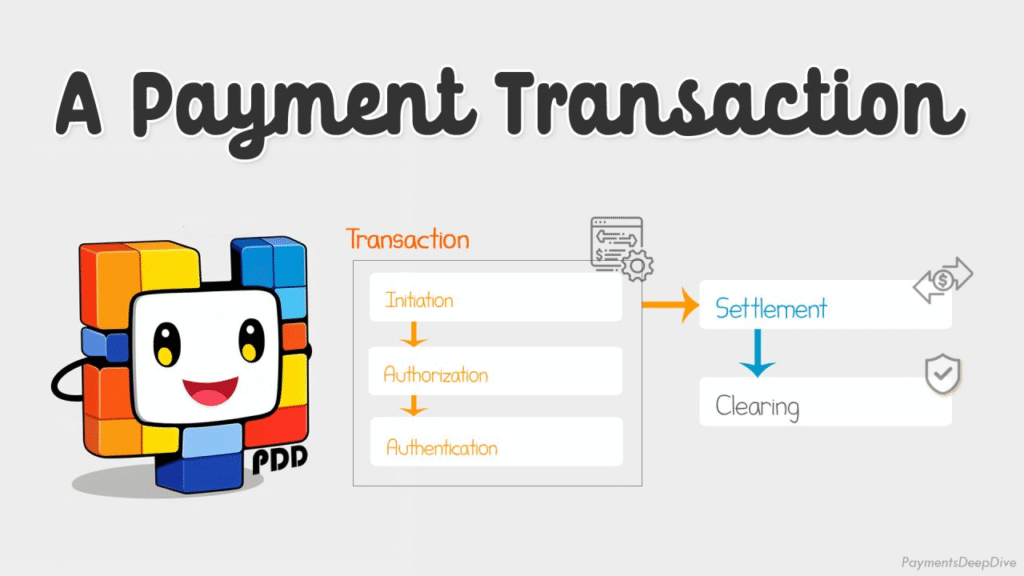
To visualize how digital payments function, examine the multi-stage lifecycle of a typical card-based or tokenized digital wallet transaction. The pipeline is divided into three major operational phases: Authorization, Clearing, and Settlement.
Real-Time Authorization (Sub-3 Seconds)
- Initiation: The cardholder taps, scans, or submits credentials at the merchant checkout.
- Gateway Routing: The Payment Gateway encrypts the payload using TLS 1.3 encryption and routes it to the Acquirer (the merchant’s acquiring bank or payment processor).
- Network Processing: The Acquirer formats the message according to ISO 8583 (the international standard for financial transaction card-originated messages) and forwards it to the payment card network (e.g., Visa, Mastercard, UnionPay).
- Issuer Validation: The network passes the transaction payload to the Issuing Bank (the cardholder’s bank). The Issuer runs rule-based fraud detection engine algorithms, verifies account balance sufficiency, validates the dynamic cryptogram, and responds with an Authorization Code (or Denial) back through the network to the merchant terminal.
Clearing (Batch Reconciliations)
Authorization merely reserves the funds; it does not move money. At the end of a business day, the merchant performs a “batch closure,” sending all accumulated authorization codes to their Acquirer. The Acquirer routes these batches through the card networks to reconcile financial claims between institutions.
Settlement (The Finality of Funds)
Actual capital movement occurs during settlement. The card network routes net settlement instructions to a central bank clearing facility (or an Automated Clearing House / ACH network). The Issuing Bank debits the cardholder’s account and transfers funds to the Acquiring Bank, which subsequently deposits the funds (minus merchant discount rates) into the merchant’s business account.
Comparative Analysis of Digital Payments Protocols
| Payment Architecture | Underlying Infrastructure | Settlement Finality Time | Primary Hardware Dependency | Major Global / Regional Implementations | Key Security Vectors |
|---|---|---|---|---|---|
| Card Networks (NFC/EMV) | Interbank Card Switches, ISO 8583 Protocols | Delayed (T+1 to T+3 business days) | NFC Reader, EMV Chip, POS Terminal | Visa, Mastercard, American Express | Dynamic Cryptograms, Tokenization, PCI-DSS compliance |
| Real-Time Account-to-Account (A2A / UPI) | Central Bank Instant Settlement Switches, Open APIs | Immediate (Near Zero-Latency Real-Time) | Smartphone, Mobile Data, Camera (for QR) | UPI (India), Pix (Brazil), FedNow (USA), PayNow (SG) | 2-Factor Authentication, Device Binding, Biometric PIN |
| Closed-Loop Digital Wallets | Proprietary Centralized Ledger Databases | Internal: Immediate External Cash-out: T+1 | Smartphone Application, Web Browser | Alipay, WeChat Pay, PayPal, GrabPay | Multi-factor Auth, Anomaly Detection, Centralized Encrypted Vaults |
| Real-Time Gross Settlement (RTGS) | Central Bank Wire Systems | Immediate / Continuous Wholesale | Terminal Workstations, SWIFT Access | Fedwire, TARGET2, CHAPS | Heavy Hardware Security Modules (HSM), Cryptographic Keys |
Structural Drivers of Global Adoption
The rapid transition from physical fiat currency to digital transaction structures is driven by interconnected economic, operational, and structural catalysts:
1. Consumer Operational Efficiency
Digital transactions collapse transaction overhead. The physical friction of requesting change, carrying cash, visiting physical ATMs, and tracking receipts manually is replaced by digital ledger consolidation. Automated personal finance management (PFM) platforms consume digital transaction APIs to give users immediate, categorized visibility into capital velocity and spending habits.
2. Merchant Overhead and Shrinkage Mitigation
For commercial entities, cash handling presents significant, hidden operational expenses:
- Cash Shrinkage: Losses caused by employee theft, administrative miscalculations, and register mismatches.
- Logistical Security Costs: The expense of armored cash transit, physical safe management, manual counting labor, and physical bank deposit drops.
- Throughput Optimization: Digital terminal taps reduce transaction execution times from 15–30 seconds (cash exchange) to under 3 seconds, increasing peak-hour customer throughput in high-volume retail environments.
3. Macroeconomic Policy and Financial Inclusion
Governments and central banks push digital payment adoption to achieve specific structural objectives:
- Formalization of the Shadow Economy: Cash enables unrecorded, informal transactions that evade taxation. Digital trails make economic velocity auditable, broadening the tax base.
- Inclusion in Digital Real Estate: A citizen without a physical bank branch nearby can participate in modern commerce using a low-cost mobile phone tied to a digital account, enabling access to micro-loans, insurance, and direct government subsidy transfers without intermediary friction.
Security Standards and Threat Vectors
As money becomes purely informational, defense systems must evolve from physical vaults to software integrity, network security, and data architecture resilience.
Core Defense Standards
- PCI-DSS (Payment Card Industry Data Security Standard): An exhaustive mandate governing any entity that stores, processes, or transmits cardholder data. Requirements include mandatory hardware security modules (HSM), network segmentation, strict access control measures, and continuous vulnerability scanning.
- 3-D Secure (3DS 2.0): An authentication protocol designed for online (Card-Not-Present) transactions. It shares rich context data (device ID, IP history, transaction behavior) between the merchant and the issuing bank to perform risk-based authentication without adding unnecessary friction for legitimate users.
- End-to-End Encryption (E2EE): Data is encrypted at the exact moment of capture at the magnetic head or NFC reader using AES-256 keys. It remains fully encrypted as it travels through local networks and servers, decrypting only inside the protected hardware security modules of the payment processor.
Structural Frameworks and Systemic Horizon Trends
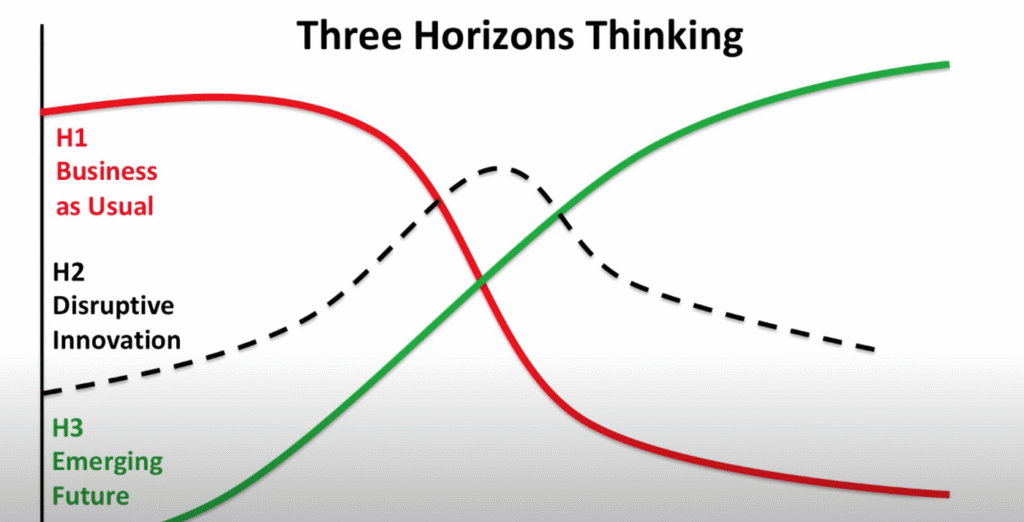
The future of digital payments is driven by structural technology shifts that reconfigure how value moves across institutional and sovereign borders.
Central Bank Digital Currencies (CBDCs)
Central banks across the globe are researching and deploying CBDCs—digital representations of sovereign fiat currency issued directly as a liability of the central bank, rather than a commercial bank.
- Retail CBDC: Designed for public use, operating as a digital direct cash equivalent without commercial bank credit risk.
- Wholesale CBDC: Restrictive tokens used exclusively between central banks and financial institutions to replace traditional interbank clearing systems with instant, cryptographically verifiable settlement mechanisms.
Cross-Border Linkages of Real-Time Payment (RTP) Systems
Historically, cross-border payment rails relied on legacy correspondent banking networks (e.g., SWIFT), which introduced multiple intermediary fees, currency conversion markups, and multi-day settlement delays. Modern initiatives directly link domestic real-time payment switches via open APIs (such as connecting Singapore’s PayNow, India’s UPI, and the Eurozone’s TIPS), enabling instant cross-border peer-to-peer transfers at low cost.
Machine-to-Machine (M2M) Autonomous Commerce

As Internet of Things (IoT) hardware proliferates, digital payment architectures are expanding beyond human initiation. Electric vehicles can automatically negotiate and execute micro-transactions with smart charging stations; smart logistics hardware can release escrow payments autonomously upon verifying sensor-validated temperature logs; and autonomous software agents can execute real-time micro-payments for API bandwidth using micro-ledger protocols.
Digital payment technology continues to shift money away from physical tokens toward an instantaneous, software-driven utility layer integrated directly into daily global communications.
Frequently Asked Questions About Digital Payments
1. What are digital payments?
Digital payments are electronic transactions where money is transferred without using physical cash. Common examples include mobile payments, QR payments, digital wallets, bank transfers, debit cards, credit cards, and contactless payments.
2. What are the most popular types of digital payments?
Popular methods include UPI, mobile wallets, QR code payments, online bank transfers, debit and credit cards, contactless payments, and peer-to-peer payment services.
3. Are digital payments safe to use?
Digital payments can be secure when used with trusted services and proper security practices. Users should protect passwords and verification codes, keep devices updated, and check payment details before confirming transactions.
4. What are the main benefits of digital payments?
The biggest benefits include convenience, faster transactions, easier spending records, online shopping support, reduced dependence on cash, and more payment options for businesses and customers.
5. How do QR code payments work?
A customer scans a payment QR code using a compatible app, confirms the recipient and amount, and authorizes the transaction. The payment is then processed electronically.